
Play & Safety · 8 min read
Medical Play: A Beginner's Guide to MedFet
From role play check-ups to full examination scenes, medical play mixes authority, vulnerability and sensation. Here is how to start, what kit you need and how to keep it safe.
By the Spanque team ·

Medical play, often shortened to MedFet, borrows the setting, tools and power dynamics of a clinic and turns them into a scene. For some people it is mostly role play: a stern doctor, a nervous patient, a check-up that gets increasingly personal. For others it is about sensation, using real clinical implements to tease, test and explore the body. Most scenes sit somewhere in between.
Why medical play appeals
The clinic is one of the few places where we routinely hand control of our bodies to a stranger in a uniform. Medical play leans into that. The patient is exposed, examined and told what will happen next, while the practitioner gets to be calm, methodical and completely in charge. Add cold steel, the snap of gloves and a sense of procedure, and you have a scene with built-in tension.
Low-risk ways to start
Begin with role play and external sensation. These need no special training and are easy to stop or adjust.
- The check-up. Gloves, a stethoscope, a blood pressure cuff and a clipboard. Take a history, listen to the heartbeat and narrate every step.
- Sensation testing. A Wartenberg pinwheel rolled along the skin, a tongue depressor, cold steel instruments straight from the fridge.
- Restraint. Medical-style straps on a bed or table make the patient feel properly confined.
- Temperature and texture. Ice, warm towels, cotton wool and alcohol-free wipes all feel different when someone cannot see what is coming.
Implements and furniture
You do not need a hospital to set a convincing scene. A steel tray of tools, a box of black nitrile gloves and a uniform go a long way. As you get more invested, furniture transforms the experience: a padded exam couch, a wheeled trolley, and for many players the ultimate piece, a gynaecological chair with stirrups and restraint points. Our medical play gift guide rounds up implements and furniture at every budget.
Advanced play needs training
Some medical play goes inside or through the skin, including speculum examinations, urethral sounding, catheters, enemas, needle play and stapling. These carry real risks of infection, injury and nerve damage. If you are interested:
- Learn from experienced, qualified players at workshops before trying anything invasive.
- Use only sterile, single-use or properly sterilised equipment, and dispose of sharps in a sharps bin.
- Never inject anything or use prescription drugs as part of a scene.
- Use plenty of sterile, water-based lubricant for anything inserted, and go slowly.
- Stop immediately if there is sharp pain, bleeding, numbness or signs of infection, and seek real medical help if needed.
If sounding interests you, our article on the joy of female sounding covers technique and hygiene in more depth.
Negotiation and consent
Medical settings can bring up real anxieties, past experiences or health worries, so talk honestly before you play. Agree what examinations and tools are on the table, which body parts are off limits, and what role each of you wants to play. Choose a safeword that is clearly outside the role play, because a patient saying "no, doctor" may be part of the fantasy. Our guide to planning a BDSM scene walks through negotiation step by step.
Crossovers
Medical play combines naturally with bondage, sensory deprivation and electro play, which suits the clinical feel perfectly. Many people also enjoy praise, humiliation or strict authority dynamics within a medical frame.
Aftercare
Step out of role clearly at the end, remove gloves and restraints, and check in with your partner as yourselves. Clean and sterilise instruments, wipe down furniture, and talk about what worked.
Learn in person
Some dungeons and play spaces have dedicated medical rooms with exam tables and gynae chairs, and many run MedFet workshops. Browse dungeons and play spaces near you to find one.
This article is for adults aged 18 and over and is general information, not medical advice. Always play safe, sane and consensual.
More from the journal
Play & Safety · 7 min read
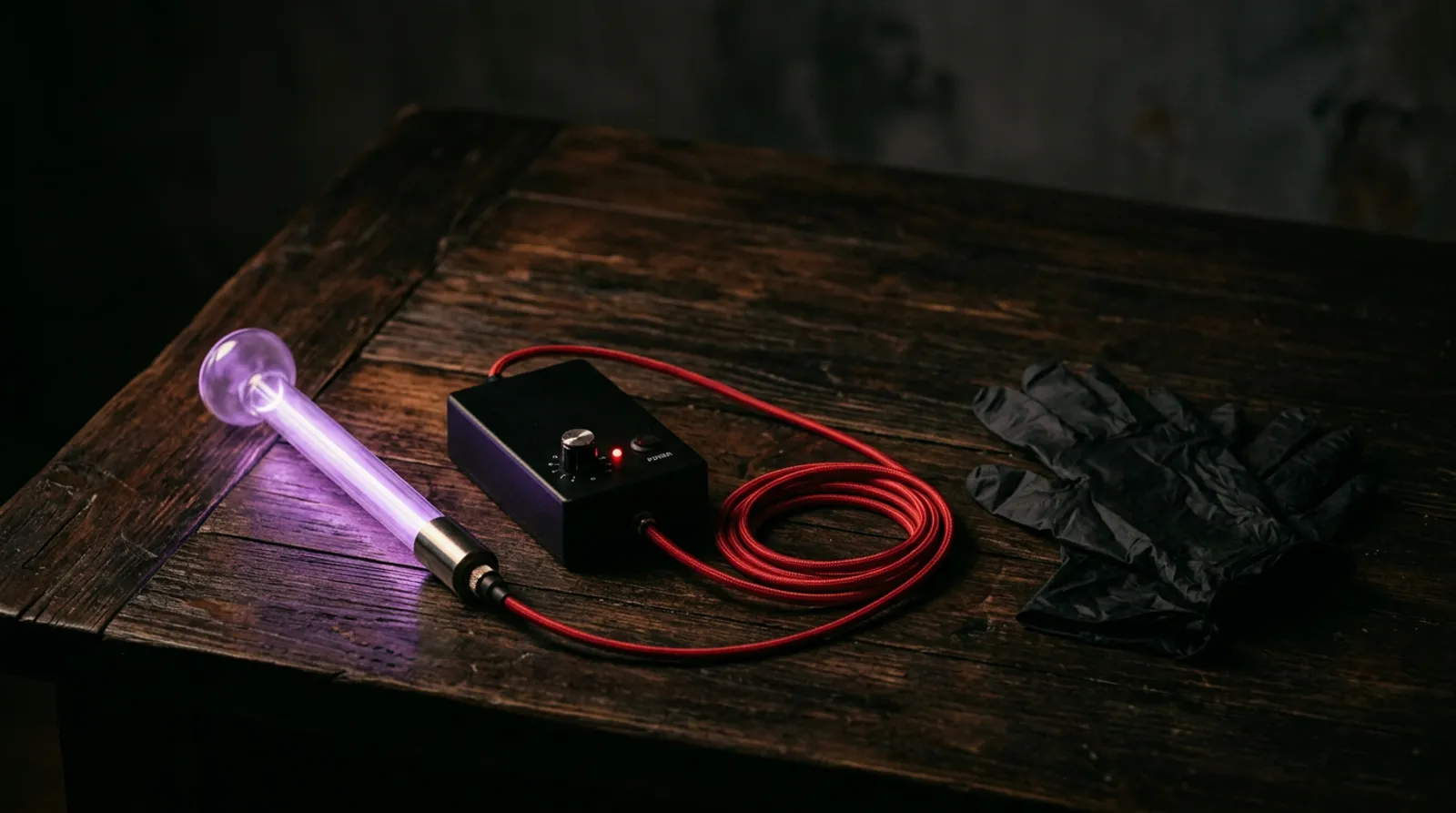
Electro Play: A Beginner's Guide to E-Stim
Electro play uses gentle electrical current to create tingles, pulses and sparks. Here is how it works, what kit to choose, and the safety rules every player needs to know.

Rope & Bondage · 8 min read
A Beginner's Guide to Shibari: Japanese Rope Bondage
Shibari is the art of Japanese rope bondage, part craft, part connection. Here is where it comes from, what rope to choose, how to tie safely and how to start learning.

Medical Play · 7 min read
The Joy of Female Sounding: A Beginner's Guide to Urethral Play
Female sounding is one of the more niche corners of medical play. Here is why people love it, what you need, and how to explore it safely and hygienically.